VR Fitness: Does It Actually Work?
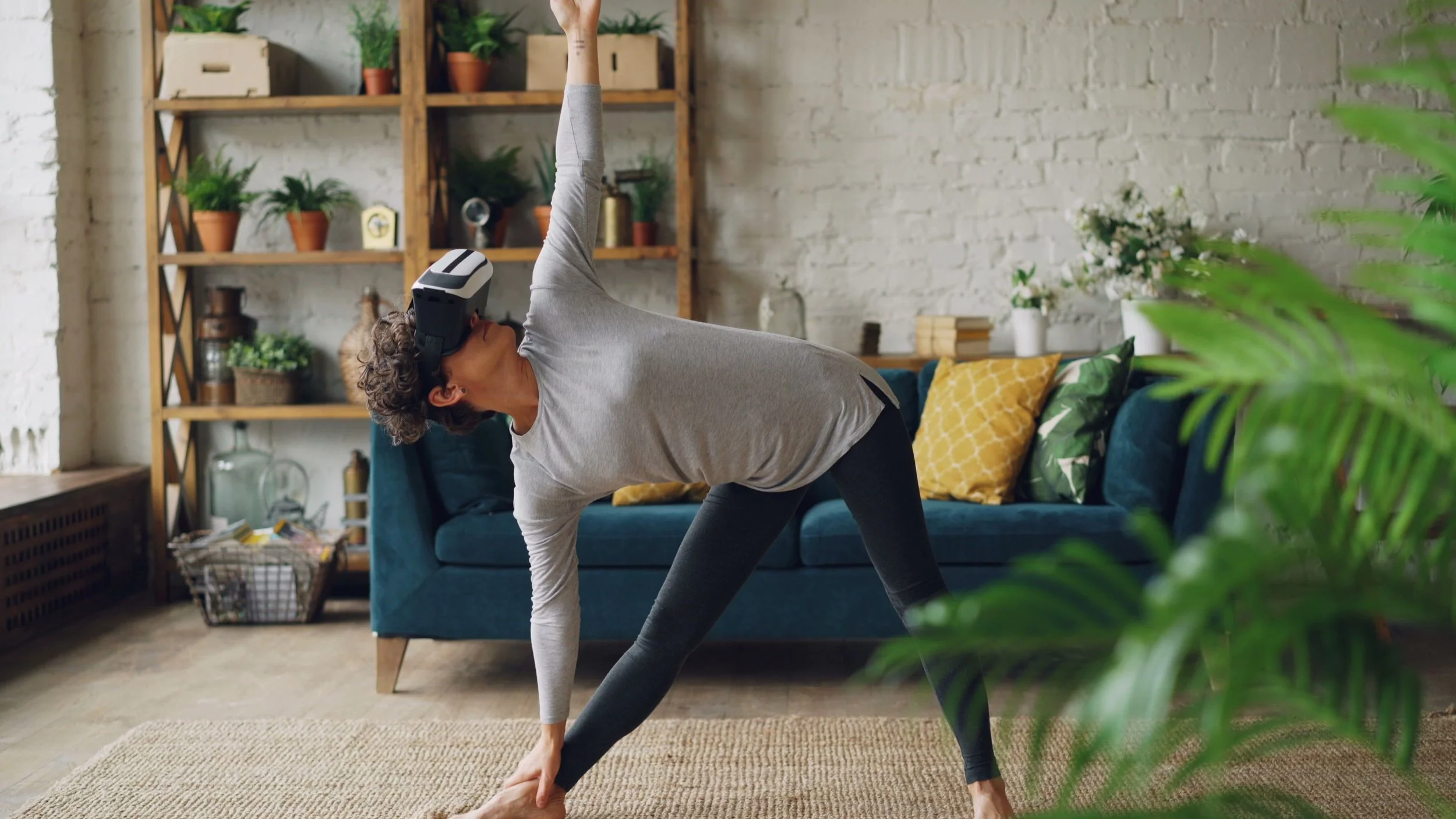
When I first wrote about virtual reality and fitness, a lot of the conversation was about what VR might eventually become. The idea was that you could put on a headset, enter a completely different environment, and turn a normal workout into something much more immersive.
We don't really have to speculate about that part anymore. VR fitness is here, there are people who regularly use it to exercise, and the technology has gotten much better.
What I think is more interesting now is whether VR actually makes sense as part of someone's fitness routine.
The answer depends a lot on what you want from it.
If putting on a headset makes you more excited to move, helps you get some cardio in at home, or gives you an alternative on days when you don't want to go to the gym, there can be real value there. If you're expecting VR to completely replace strength training, personalized coaching, or every other type of exercise you do, we're not there yet.
VR Fitness Can Absolutely Count as Exercise
One of the first things worth clearing up is that exercising in virtual reality isn't somehow fake exercise because there happens to be a game involved.
VR fitness apps can involve boxing, squatting, reaching, dancing, dodging, cycling, rowing, and plenty of other repetitive movement. Depending on the activity and how hard you're working, that can provide a legitimate cardiovascular workout.
Recent research has generally supported VR as a viable way to get people moving. A 2025 systematic review of exergaming interventions found improvements in overall physical activity, moderate-to-vigorous physical activity, and daily step counts. More recent research has also found that VR exercise can produce cardiovascular demands comparable to more traditional forms of exercise in some settings.
That doesn't mean every VR game is a workout. Swinging your arms around for ten minutes isn't automatically equivalent to going for a run or doing a full training session. The actual exercise still matters.
I would think about it the same way I think about almost any other form of cardio: what are you doing, how hard are you working, how long are you doing it, and does it help support what you're trying to accomplish?
The Biggest Advantage Might Be That It's Fun
This is probably the part of VR fitness that interests me most.
There are plenty of effective ways to exercise. The problem is that an exercise program doesn't do much for you if you hate doing it and eventually stop.
A 2026 systematic review and meta-analysis comparing immersive VR exercise with traditional exercise found that people generally reported greater enjoyment during VR exercise. That's worth paying attention to because enjoyment can make it easier for someone to come back and do the activity again.
I don't think we need to overcomplicate that.
If you dislike traditional cardio but will happily spend 30 minutes boxing, dancing, or playing a movement-based game in VR, I would much rather have you doing that than repeatedly planning to use the treadmill and never actually getting on it.
That fits pretty closely with how I approach exercise in general. The theoretically perfect workout isn't very useful if it doesn't fit your life well enough for you to keep doing it.
Where VR Fitness Still Has Limitations
Where I think people need to be a little more realistic is when VR gets presented as a replacement for an entire fitness program.
Most consumer VR fitness is still much better suited to movement and cardio than it is to traditional strength training.
There are certainly bodyweight exercises and some strength-oriented VR experiences, and that area will probably continue to develop. But progressive strength training usually involves gradually increasing resistance, selecting exercises around a person's goals, managing fatigue, and tracking performance over time.
A 2026 review looking specifically at VR and augmented-reality strength training found that most of the existing systems still rely heavily on bodyweight exercise, while research involving meaningful external resistance and higher-intensity strength training remains limited.
There are also some very practical issues. Wearing a headset changes your awareness of the room around you. Some people experience motion sickness or eye strain. You need enough space to move safely, and I'm not particularly interested in having someone perform a heavy squat or deadlift while their view of the real world is obstructed by a headset.
That doesn't make VR bad. It just means every technology has a job it is better suited for.
For most people, I currently see VR fitting more naturally alongside strength training than replacing it.
Where AI Fits Into VR Fitness
This is where the original version of this article spent a lot of time talking about VR and AI coming together. That is starting to happen, but I don't think the two technologies need to be treated as the same thing.
AI can potentially make VR fitness more responsive. A system can use information about your previous workouts, performance, heart rate, or movement to adjust difficulty, recommend workouts, or provide feedback.
Movement analysis is also improving. Cameras and sensors can increasingly recognize exercises and body positions, which creates the possibility of much more individualized feedback inside a virtual or mixed-reality workout.
Those tools are interesting, but the same limitations apply here that I discussed in my article about whether AI will replace personal trainers. Recognizing what your body is doing and deciding what should actually be changed are not necessarily the same thing.
I expect AI to make VR fitness better. I don't think adding AI automatically turns a fitness game into personalized coaching.
What About VR Personal Training?
This was another idea I was excited about when I originally wrote this article: instead of seeing your trainer inside a little Zoom window, you might eventually have a life-size version of that trainer standing in your room.
We are getting closer to experiences like that as mixed reality, spatial computing, body tracking, and 3D avatars improve.
I'm still not convinced, though, that putting on a headset automatically improves a normal personal-training session.
Video training is simple. I can see a client, they can see me, we can talk naturally, and the only equipment they need to interact with during the workout is their actual workout equipment.
For VR personal training to be better, it has to solve a real problem rather than simply be more impressive technology.
There may eventually be situations where spatial demonstrations, different viewing angles, movement tracking, or an augmented trainer inside the room genuinely improve the experience. If that happens, I'm interested.
But I wouldn't add a headset to someone's workout just because we can.
Should You Try VR Fitness?
If you already own a headset, enjoy games, or struggle to find a form of cardio that you actually like, I think VR fitness is absolutely worth experimenting with.
It may be especially useful as another option rather than something that has to become your entire routine. You might strength train a few days per week and use VR boxing for cardio. You might use it when the weather is bad, when you're traveling, or when you simply don't feel like doing your normal workout.
Some people may end up loving it and using it several times a week. Other people will try it twice and decide that they would rather go for a walk.
Both are fine.
Fitness technology tends to get discussed as though every new device is either going to change exercise forever or disappear completely. In reality, most useful fitness technology ends up somewhere in the middle. It gives people another way to move, track what they're doing, get guidance, or make exercise a little easier to fit into their lives.
That's how I currently look at VR.
It doesn't need to replace the gym, your dumbbells, your running shoes, or your trainer. If it gets you moving more consistently and you enjoy doing it, that's already a pretty good reason to use it.