Does Strength Training Make You Stiff for Golf?
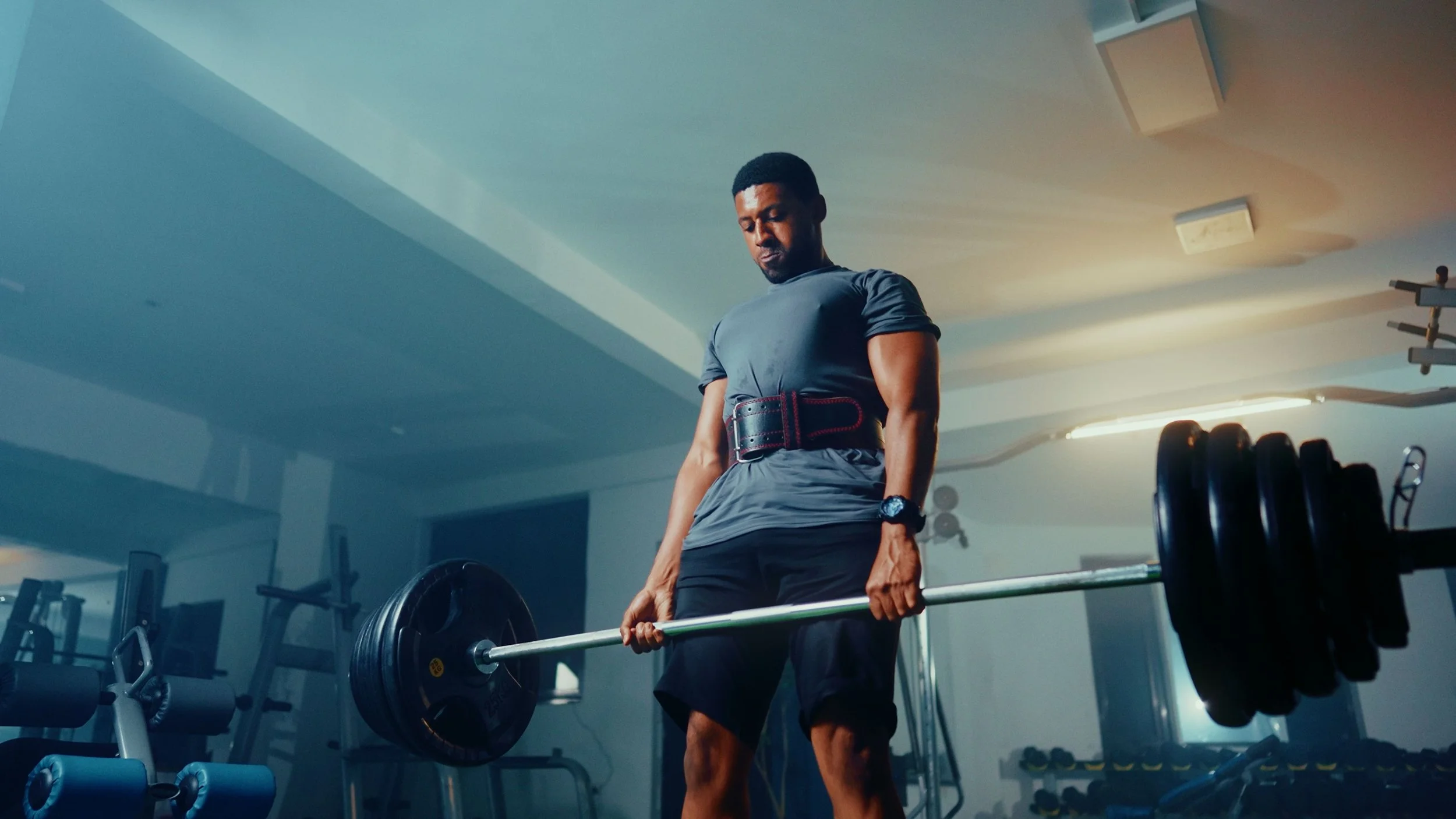
Stock photo by Abuti Engidashet on Pexels.
When I started taking golf lessons, I was in a pretty typical bulking phase. I was lifting heavy, getting bigger and stronger, and deadlifting well over 300 pounds. I was also very stiff. My coach would physically move me into the position they wanted for my backswing, and I couldn’t comfortably hold it there on my own.
It would be easy to look at that combination and blame the weights. But I wasn’t doing much dedicated mobility work, golf was new to me, and I may not have been particularly flexible to begin with. I can’t say how much each of those things contributed. What I can say is that being able to lift a lot of weight hadn’t prepared me for every movement my golf swing required.
Strength training can fit very well into a golfer’s routine, including a routine that involves lifting heavy and building muscle. The important part is paying attention to how you’re moving, what your training covers, and whether you’re recovering well enough to enjoy your time on the course.
How strength training affects flexibility
Lifting weights doesn’t automatically make you less flexible. Research has found that resistance training can actually improve range of motion. In one small study, people doing a full-range strength program improved some measures of flexibility about as much as people who were stretching. That doesn’t mean every lift will make you more mobile, or that you should throw out your stretching routine. It does mean getting stronger and moving more freely can happen together.
How you lift matters. A controlled split squat through a range you can manage gives you a different movement experience from repeatedly cutting every rep short to move more weight. There can be good reasons to use a shorter range, especially while learning an exercise or working around a limitation, but it’s worth noticing whether your whole program has become limited to positions you already find easy.
Your program also needs to cover the movements you care about. Squats, rows and presses can all be useful, but they don’t automatically address every restriction in your hips, shoulders or rotation. You may still need some specific work alongside them.
What your strength routine might be missing
A program built around familiar lifts can leave some movements undertrained. You might be comfortable squatting and hinging but rarely spend time working on rotation. You might be getting stronger with both feet planted while doing very little work that asks you to control your balance on one leg. Those lifts can still be worthwhile; you just need to look at what the rest of your week includes.
Golf asks you to coordinate your hips, torso and shoulders, shift pressure and control a club as you move. That takes practice, even when you already have a good strength base. Being able to turn farther is only helpful if you can do it comfortably and keep control of the movement. Chasing a bigger backswing without understanding what’s limiting yours can leave you working on the wrong thing.
This is where your training and golf coaching can complement each other. Your coach can help you understand the swing movement you’re trying to make, while your trainer can help you work on the physical abilities it requires. You may need more range in a particular movement, better control of the range you have, or simply more time learning how to put it together.
Feeling stiff after lifting
Sometimes “stiff” means you’re sore and tired after a workout. Other times it means a movement feels restricted even when you’re rested. Those situations can feel similar, but they call for different adjustments.
Imagine a hard lower-body workout on Friday followed by a Saturday morning tee time. Your hamstrings are sore, your legs feel tired, and you don’t feel comfortable making your usual turn. A hard or unfamiliar workout can temporarily reduce strength and range of motion, although soreness doesn’t always come with a measurable loss of movement. One rough morning on the course doesn’t tell you that lifting is gradually making you less flexible.
If that pattern keeps happening, look at the amount of work you’re doing and where it falls in your week. It may help to move your hardest session farther from an important round, reduce the volume, or avoid introducing a demanding new exercise right before you play. Upper-body fatigue can be worth considering too. You don’t have to be perfectly fresh every time you pick up a club, but your training schedule should give you a reasonable chance to feel good when golf matters to you. How much recovery you need will vary with the workout and your own response.
Building mobility you can use in your swing
Getting into a position and controlling yourself there are related skills, but they aren’t identical. You may be able to reach farther with assistance or during a stretch than you can comfortably move on your own. That’s useful information when you’re deciding what to work on.
For golf, it helps to think beyond how far you can stretch. You also need to control your movement while maintaining balance and producing force. Someone who has plenty of available range may need more practice and strength within it. Someone who genuinely lacks the motion a particular position requires may benefit from working on that limitation and discussing suitable swing adjustments with their coach.
A mobility routine is most useful when it addresses something you actually need. Doing every hip and shoulder drill you find online can take a lot of time without telling you whether anything is helping. Choose a few relevant movements, work on them consistently, and pay attention to whether the positions you’re working toward become easier to reach and control.
Keeping heavy lifting in a golf training program
If you enjoy lifting heavy or building muscle, golf doesn’t mean you have to give those goals up. Strength and power can be useful on the course. Golf training programs that combine strength work with flexibility or power exercises have improved clubhead speed in small studies, though that doesn’t guarantee better contact, accuracy or lower scores. You still have to practice golf.
I’ve since reintroduced heavy deadlifts into my own training, and so far I haven’t noticed any loss of mobility. I keep adjusting the balance between my golf goals and my strength, physique and fitness goals outside of golf, retooling my training as those priorities change.
For the broader picture, I cover how strength, mobility, stability and power fit together in my golf fitness guide.
What to change when you feel stiff
Start by noticing when it happens. If you usually move well until the day after a demanding workout, the first things to review are the workload, your recovery and the timing of your sessions. If you feel restricted in the same position when you’re well rested, it makes more sense to look closely at that movement instead of assuming you simply need another rest day.
Next, look at how you’re performing your exercises. Can you use a little more range with good control if you reduce the weight? Would a different setup or variation let you move more comfortably? Progress can mean becoming stronger through a larger range, even when the number on the dumbbell stays the same. There’s no need to force a depth or position your body isn’t ready for.
Mobility work can also be part of your existing training. A few targeted movements in your warmup, controlled split squats, half-kneeling presses or suitable rotational work may fit more easily than adding a long separate routine. What matters is whether the work addresses your limitation and whether you can do it consistently. Give changes enough time to evaluate, and keep track of how you feel in both your workouts and your golf practice.
Don’t assume pain is just stiffness you need to stretch through. Stop a movement that causes sharp pain. Persistent or worsening pain, or a significant restriction that isn’t improving, is a reason to speak with a physical therapist or another qualified healthcare professional. A trainer and golf coach can help with training and swing choices, but they shouldn’t guess at an injury.
Strength and mobility can improve together
If you enjoy strength training, you can keep it as an important part of your routine. When you feel stiff, pay attention to the pattern before deciding what to change. A workout that leaves you sore before every round needs a different adjustment from a movement you struggle with even when you’re rested. Working out that distinction will help you spend your training time more usefully, so getting stronger can support the golf you want to play.
Sources
Morton et al. (2011). Resistance training vs. static stretching: effects on flexibility and strength. https://pubmed.ncbi.nlm.nih.gov/21969080/
Santos et al. (2010). Influence of moderately intense strength training on flexibility in sedentary young women. https://pubmed.ncbi.nlm.nih.gov/20940647/
Parr et al. (2009). Symptomatic and functional responses to concentric-eccentric isokinetic versus eccentric-only isotonic exercise. https://pmc.ncbi.nlm.nih.gov/articles/PMC2742454/
Thompson and Osness (2004). Effects of an 8-week multimodal exercise program on strength, flexibility, and golf performance in 55- to 79-year-old men. https://pubmed.ncbi.nlm.nih.gov/15223883/
Fletcher and Hartwell (2004). Effect of an 8-week combined weights and plyometrics training program on golf drive performance. https://pubmed.ncbi.nlm.nih.gov/14971982/